
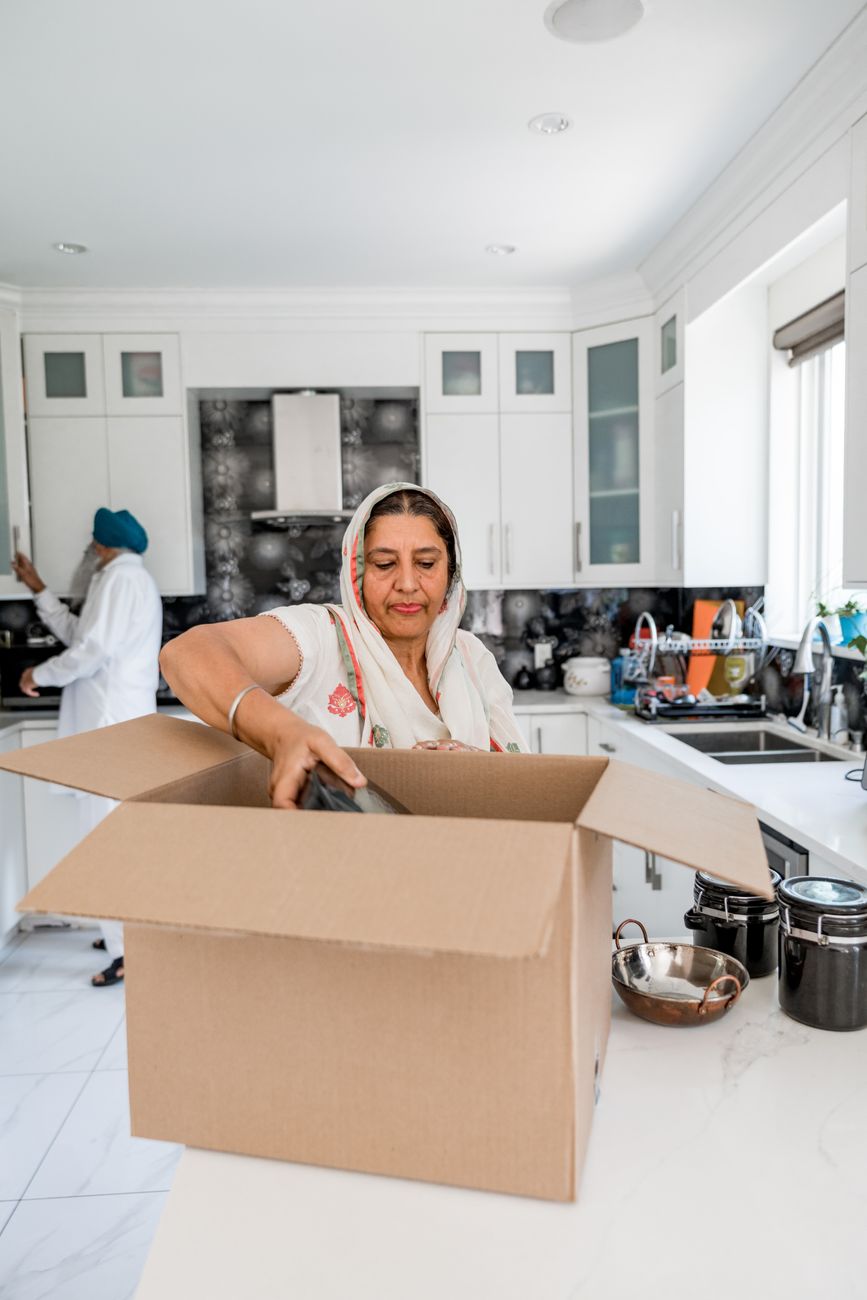
As move-in season winds down, I’m reminded of a fundamental truth: when you’re downsizing after decades in a home, you’re not just sorting through physical objects—you’re sorting through a lifetime of memories.
Moving to a smaller space means deciding what comes with you, what to pass along to loved ones, what to donate and what you’re ready to let go. Those choices are practical, but they are also deeply personal.
For older adults—and the family members guiding them—here are five essential lessons to approach downsizing with ease, intention and care.
1. People have more stuff than they think—start early to set yourself up for success
When you’ve lived in a home for decades, you’re not simply looking at rooms full of belongings—you’re looking at a lifetime of memories.
There may be your children’s grade-school report cards and artwork, your mother’s handwritten recipes, photographs from family vacations, wedding gifts, books you’ve collected over the years, furniture passed down through generations and boxes of things you haven’t opened in years. There are also the everyday items that quietly accumulate: clothes, cookware, tools, paperwork and things you once thought you might use someday.
Because these belongings accumulated gradually, it can be difficult to realize just how much there is until you begin preparing for a move. Then suddenly, every drawer, closet, cabinet and storage area presents another decision.
That’s why starting early is one of the best gifts you can give yourself. Instead of trying to make decisions about an entire lifetime of belongings in a matter of weeks, give yourself time to move through one room, category or collection at a time.
For a typical home clean-out, we recommend allowing at least three months whenever possible. If you have six months—or even a full year—the additional time can make an enormous difference. It gives you the opportunity to work at a comfortable pace, involve family and friends, thoughtfully consider sentimental belongings and decide what you truly want to carry forward.
Some decisions will be easy. Others may bring up memories, emotions, or conversations with people you love. That’s okay. The goal isn’t to rush through a lifetime of belongings. It’s to give yourself the time and space to make thoughtful decisions about what comes with you, what can be shared, and what you’re ready to let go.
2. Taking stock of your everyday stuff
When you’ve spent decades in one home, even the most ordinary belongings can tell a story. Books, clothing and cookware are good examples of how much can accumulate—and how different those belongings may be from what you need or use today.
Take a closet. You might find clothing from different stages of your life: clothes you wore when you were working, pieces you bought for a lifestyle you thought you’d have, or things you simply never got around to wearing. You may also realize you have several versions of the same thing—more sweaters, jackets, shoes or dress clothes than you could reasonably use in a smaller home.
The same can happen with books. Shelves may hold books you loved, books you intended to read, books that belonged to someone else and books you haven’t opened in years. And the kitchen can tell a similar story: duplicate pots and pans, serving pieces for a much larger household, or gadgets that haven’t been used since the kids were living at home.
None of these decisions has to be purely practical. A cookbook may remind you of your mother. A dress may take you back to an important occasion. A set of dishes may have been a wedding gift.
That’s what makes this process more than simply cleaning out a house. You’re deciding which parts of your life still have a place in the home you’re moving toward.
And sometimes, what you choose to keep isn’t necessarily the thing you use most. It may simply be the thing that still brings you joy, tells an important story or connects you to someone you love.
3. Paperwork can be one of the hardest things to let go
Paperwork may be one of the most intimidating parts of going through a lifetime of belongings. Unlike a sweater or a kitchen gadget, a piece of paper can feel like proof—of where you worked, what you owned, what you paid, what you earned, or what happened at a particular point in your life.
You may come across decades of tax returns, car titles, bank and credit card statements, employment records, insurance documents, medical records, receipts and other financial or personal documents. When you’ve kept something for years, it can be difficult to feel confident that it’s safe to let go.
At the same time, the way we keep records has changed dramatically. Many documents that once existed only on paper are now available digitally or can be obtained again if needed. That doesn’t mean everything should be discarded—certain records are important to retain and requirements vary depending on the type of document and your individual circumstances.
The challenge is separating what is genuinely important from what you’ve simply been carrying forward.
This is an area where having someone help you work through the decisions can make a significant difference. San Isidro can help you sort through accumulated paperwork, identify what may no longer be necessary, and coordinate shredding and appropriate disposal of documents you decide to release.
The goal isn’t to simply reduce a stack of papers. It’s to help you feel confident about what you’re keeping, understand what you’re ready to let go, and lighten the physical burden of maintaining records you no longer need.
4. Give heirlooms and sentimental items the time they deserve
Some of the belongings you encounter while preparing for a move will be easy to part with. Others will stop you in your tracks.
These are often the items that have been part of your family for years—or even generations. Photographs and photo albums. Jewelry. China. Artwork. Letters. Family recipes. A favorite piece of furniture. Something that belonged to your parents or grandparents. An object that may not seem particularly valuable to someone else but carries a story only you know.
These belongings can have both monetary and emotional value, which makes them very different from the everyday things you’re sorting through.
They also deserve time.
You may want to bring some of them with you. Others might be especially meaningful to a child, grandchild, sibling, or close friend. There may be photographs worth digitizing so the memories can be preserved and shared without keeping every physical copy. And there may be things you discover you’re ready to release once you’ve had the opportunity to remember where they came from and why you’ve held onto them.
This is where downsizing can become something more than deciding what fits in a smaller home. It’s an opportunity to think about what you want to preserve, what you want to share, and what you want to carry into the next chapter of your life.
Take the time these belongings deserve. Look at the photographs. Tell the stories. Ask your family what has meaning to them. And if you’re not ready to decide, that’s okay, too.
Some things are worth taking a little longer to consider.
5. Don’t forget the spaces you don’t see everyday
Some of the biggest surprises can be waiting in the places you rarely visit.
Basements, attics, garages, sheds, utility rooms and storage areas can become repositories for things that no longer have a place in everyday life. Over the years, they may accumulate almost unnoticed: boxes that haven’t been opened in decades, holiday decorations, old tools, extra cleaning supplies, gardening equipment, paint, household repair items and things you kept because you thought you might need them someday.
When you’re moving to a smaller home, these spaces deserve attention, too.
And they often require more than simply deciding what to keep and what to discard. They require an action plan. Cleaning supplies, chemicals, paint, electronics, tools, large equipment, and other household materials may each have different requirements for donation, recycling, disposal, or removal.
You may also discover items that could be useful to a family member, neighbor, community organization, or someone who is taking over your home.
This is where having a plan can make the process feel much more manageable. Instead of looking at a basement or garage as one enormous project, think about what is there, what needs to happen with it, and who may be able to help.
These hidden spaces often hold the final layers of a lifetime of accumulation. Giving them the attention they deserve can make the entire transition feel lighter—and ensure that you’re not simply moving years of stored belongings from one place to another.
Making room for what comes next
Downsizing after decades in a home is about much more than deciding what will fit in a smaller space. It’s about taking stock of a lifetime—what you’ve accumulated, what you’ve accomplished, what you’ve held onto, and what still matters to you today.
Some things will come with you. Some will find new homes with children, grandchildren, friends, or neighbors. Some memories can be preserved in photographs or digital form. And some things, quite simply, may have served their purpose.
There is no perfect formula for deciding what stays and what goes. The process is personal, and it deserves time, patience, and care.
At San Isidro Decluttering & Home Organization, we’re here to help make that process feel manageable. We provide practical, judgment-free support as you sort, decide, share, donate and let go—so you can spend less time overwhelmed by what’s behind you and more time thinking about what you want your next chapter to look like.
Because ultimately, downsizing isn’t about taking less with you.
It’s about making room for what matters most.

