
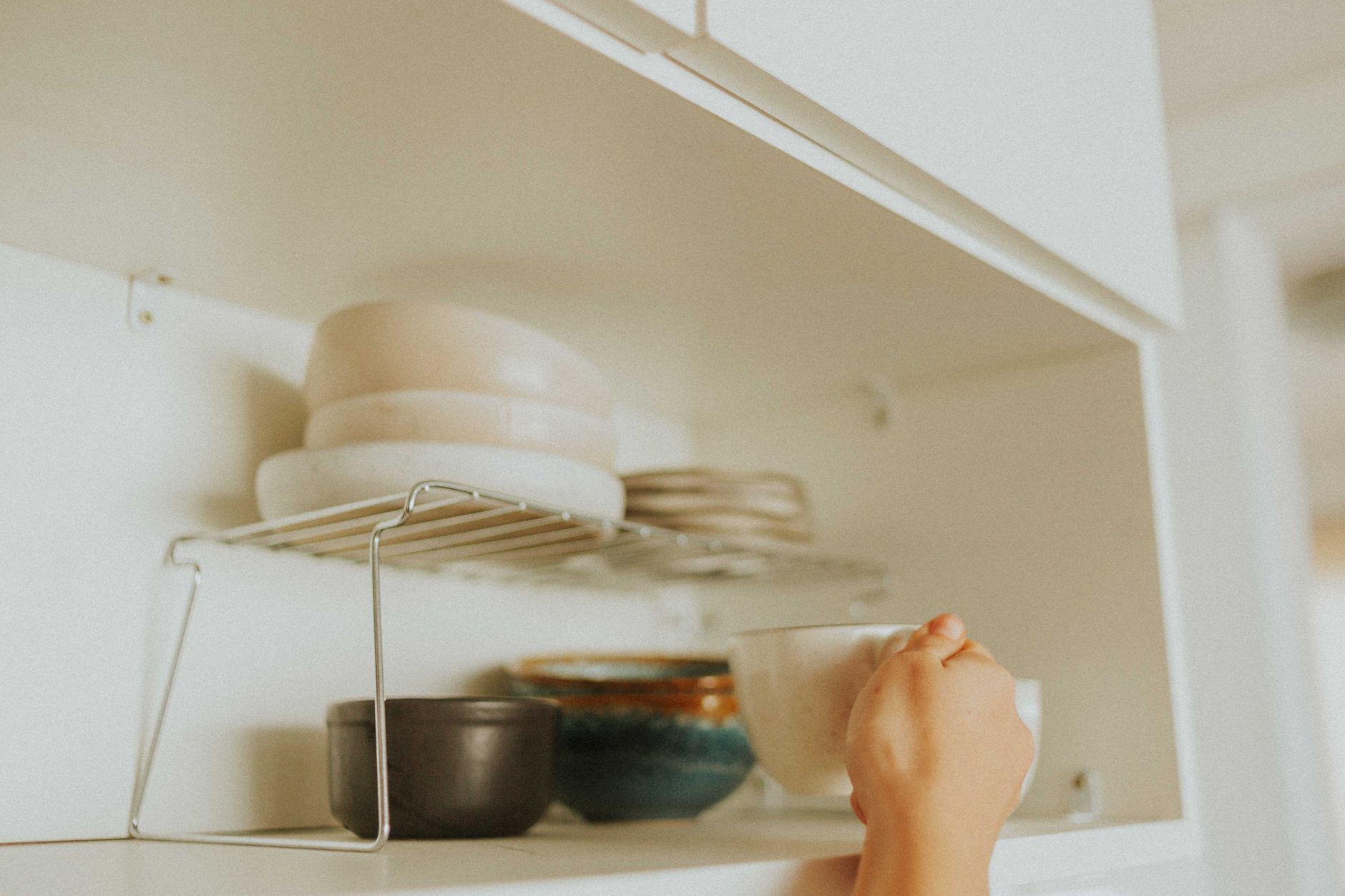
There’s something about opening a drawer and being able to see what’s actually inside. Or reaching into a kitchen cabinet without having to move five things out of the way first.
Decluttering isn’t just about making your home look better. It can make everyday life easier—and sometimes, the best place to start is with the one space that has been quietly gnawing at you for months.
Maybe it’s an overflowing dresser. A coat closet that has somehow become home to coats, athletic gear, umbrellas and everything else that doesn’t have a designated place. Or a kitchen cabinet where things have been pushed so far into the back that you aren’t even sure what’s there anymore.
As we move into shoulder season—between summer break and the holidays—life doesn’t necessarily slow down. With the kids back at school and routines picking up again, your calendar may be just as full as ever. That’s why a small reset can be so valuable: you don’t need to tackle the whole house to make a meaningful difference. Sometimes, getting one troublesome space under control can make everyday life feel a little easier.
1. Start Small—and Start Somewhere That Bothers You
You don’t need to declutter your entire house.
In fact, we recommend starting with one area that has been bothering you for a while. Maybe the system you’ve created keeps breaking down. Maybe the space is overflowing. Maybe you’re constantly looking for something because you know it’s there, but you can never seem to find it.
Choose one area and give yourself permission to focus just on that.
The goal isn’t to create an Instagram-worthy space. It’s to make one part of your home work better for you.
2. Take Everything Out
This may sound counterintuitive, but sometimes the best way to understand a space is to empty it completely.
Put down a blanket or large towel and take everything out of the area you’re working on. Suddenly, you’ll have a much better sense of your universe—everything that actually lives there.
That dresser might reveal new shirts alongside ones you haven’t worn in years. The coat closet may contain an inherited parka with no insulation, broken umbrellas and athletic equipment you’ve forgotten about. A kitchen cabinet might uncover expired cans, duplicate items and bags of grains pushed into the back, the one ‘cool’ item you bought at Trader Joe’s that no longer seems so appealing.
Once everything is visible, start letting go of the things that no longer serve you.
Then begin grouping the things you’re keeping by category: shirts with shirts, gloves with gloves, cans with cans, grains with grains.
You may be surprised by what you discover when everything is finally in front of you.
3. Contain What Remains
Once you’ve decided what stays, give those belongings a home.
This is where containers and simple organizing tools can help—but they don’t have to be complicated or expensive.
Think of it as building a little fort around what you have. A three-gallon container can keep open bags of rice together and visible. Hooks can give reusable bags or athletic gear a home. Drawer dividers can keep socks from becoming one giant pile.
The right container isn’t necessarily the fanciest one. It’s the one that makes your belongings easy to see, reach and put away.
4. Make Sure the System Works for You
This may be the most important step.
A system isn’t successful because it looks organized on the day you create it. It’s successful when you can actually maintain it.
Can you reach what you use most often? Is it easy to put things away? Can everyone in the household understand where something belongs? Does the system support the way you naturally move through your home?
If the answer is no, the system may need to change.
Organization should work with your lifestyle—not against it.
Sometimes the solution isn’t another container. It may be moving something closer to where you actually use it, reducing what you have, or creating a simpler system altogether.
The Gift of Time
One of the most rewarding parts of creating a system that works is what happens after the organizing session.
When the things you use regularly have a logical home, you spend less time looking for them, moving things around to reach them, or deciding where to put them away. Those small moments add up.
Think about your kitchen. If you regularly spend five minutes searching for a particular ingredient, moving items out of the way, or reorganizing a crowded cabinet every time you need it, that can easily become dozens of minutes over the course of a month. A simple system that keeps frequently used ingredients visible and accessible can give that time back to you.
The same is true for a dresser where you no longer have to dig through a pile to find the shirt you want, or an entryway where keys, bags and shoes have designated places.
The real payoff of decluttering isn’t just the space you reclaim. It’s the time you get back every day.
A Little Reset Now Can Make a Big Difference Later
Shoulder season offers a natural pause between the activity of summer and the holidays ahead. It’s a chance to look around your home and ask: What isn’t working anymore?
You don’t have to tackle everything. Start with one area. Give yourself the time to see what you actually have, let go of what no longer serves you, and create a system that makes everyday life a little easier.
That’s the real gift of decluttering. You’re not just making things better for today. You’re making things easier for the person you’ll be tomorrow.
At San Isidro Decluttering & Home Organization, we help clients thoughtfully declutter their spaces and create practical systems that fit the way they actually live. Whether you’re overwhelmed by one troublesome area or ready to tackle a larger project, our compassionate, judgment-free approach helps make the process manageable.
As the seasons change, let us help you make room for what comes next.

